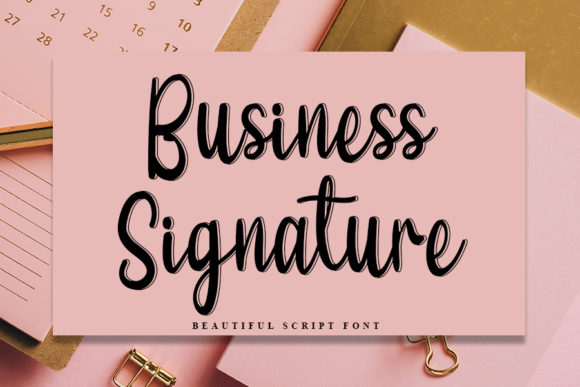
Business Signature: A Font That Elevates Every Editorial Moment
Sitting at my desk, I was tasked with redesigning the header for a lifestyle blog that had grown in popularity but lacked a cohesive visual identity. The previous font felt too modern, too sterile, and not quite aligned with the warm, approachable tone of the content. As I scrolled through a curated list of script fonts, one stood out—Business Signature. Its delicate curves and elegant rhythm immediately felt like the right choice.
A Font With Personality
Business Signature is more than just a script font—it’s a whisper of sophistication wrapped in clean, well-rounded strokes. Each letter flows with a natural grace, as if written by hand but refined to perfection. It carries a subtle energy, balancing softness with strength, making it ideal for editorial projects that demand both charm and professionalism.
I tested it on the blog header, pairing it with a clean sans serif for body text. The contrast was striking yet harmonious. The title felt inviting, while the rest of the content remained easy to read. It wasn’t just about aesthetics; it was about creating a reading experience that felt intentional and well-designed.
Where Business Signature Shines
The versatility of Business Signature made it an excellent fit for multiple areas of the blog redesign. I used it for article titles, pull quotes, and even decorative accents within the content. Its distinct style added visual interest without overwhelming the reader. For instance, using it in section headings helped break up long blocks of text, guiding the eye smoothly from one idea to the next.
In another project, I incorporated Business Signature into a printable planner. The font’s elegance gave the design a touch of refinement, making the planner feel like a premium product rather than a generic template. It worked beautifully for dates, event names, and motivational headers, adding a personal flair to each page.
When designing a recipe ebook, I found that Business Signature lent itself well to chapter openers and ingredient lists. Its readability on screen and in print made it suitable for both digital and physical formats. Even in smaller sizes, the font retained its clarity, which is essential when working with long-form content or detailed instructions.
Designing With Purpose
One of the key aspects of using Business Signature is understanding where it works best. While it’s a display font, it’s not suited for large bodies of text. Instead, it thrives in headlines, subheadings, and decorative elements. Pairing it with a readable serif or sans serif font for body copy ensures that the design remains balanced and functional.
I often pair Business Signature with a traditional serif font like Georgia or Times New Roman for body text. This combination gives the layout a classic, polished look. For digital projects, a clean sans serif such as Helvetica or Arial can provide a modern counterpoint, especially for captions or navigation menus.
Readability is also crucial when considering how the font will perform across different mediums. On mobile devices, Business Signature maintains its legibility, though I recommend using it sparingly in smaller screens. When exporting to PDF or printing, the font holds up well, maintaining its elegant character without losing clarity.
Practical Considerations
Before committing to Business Signature, it’s important to check what styles and alternates are included. Some script fonts come with limited options, but Business Signature offers a range of ligatures and weights that allow for creative flexibility. These features make it easier to craft unique designs without sacrificing consistency.
If you’re planning to use the font in commercial projects—such as ebooks, templates, or client publications—make sure to verify the licensing terms. Business Signature is a premium font, and proper licensing ensures that your work remains compliant and professional.
Support for multiple languages is another consideration, especially if your publication targets a global audience. Fortunately, Business Signature provides broad multilingual support, making it adaptable to various editorial needs.
Finally, always test the font in your intended context. Whether it’s for a digital magazine, a newsletter, or a coaching workbook, seeing how it behaves in real layouts will help you determine if it’s the right fit for your project.
As I finalized the blog redesign, I couldn’t help but admire how Business Signature transformed the overall look and feel. It wasn’t just about choosing a font—it was about crafting a visual language that spoke to the reader, inviting them into a world of thoughtful design and engaging storytelling.